

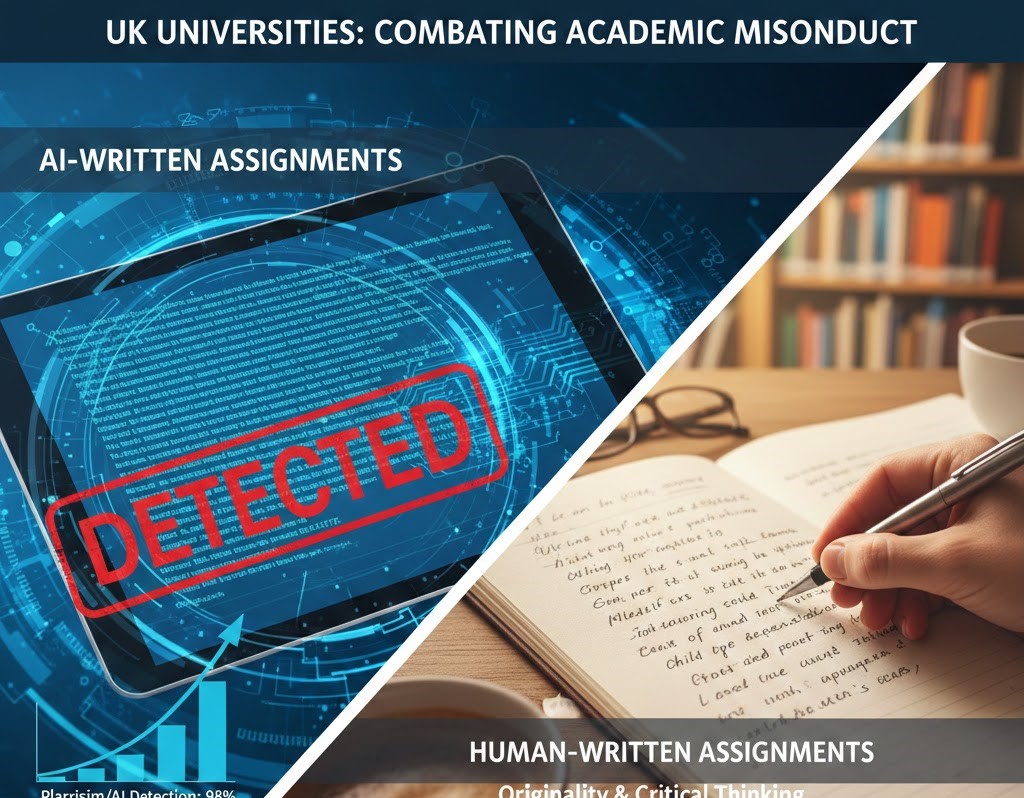
Artificial intelligence is rapidly changing how students approach coursework, essays, and dissertations. With tools like ChatGPT becoming mainstream, many UK students are asking the same question: can universities detect AI-written assignments? And more importantly, what happens if they do?
This blog breaks down what UK universities can actually detect, how AI detection works, and what students need to know to stay on the right side of academic integrity.
The Rise of AI in UK Higher Education
Across the UK, students are increasingly using AI tools for brainstorming, structuring essays, and improving grammar. While AI can be a powerful learning aid, universities are becoming more vigilant about AI-generated coursework and academic misconduct.
Most UK universities follow strict academic integrity policies, and submitting fully AI-written work as your own is usually treated the same as plagiarism.
Can UK Universities Detect AI-Written Assignments?
The short answer: sometimes — but not perfectly.
UK universities primarily rely on a combination of AI detection software, plagiarism checkers, and human academic judgement.
1. AI Detection Software
Many institutions use tools integrated into platforms like Turnitin. These tools analyse writing patterns, sentence predictability, and language consistency to estimate whether text may have been AI-generated.
However, AI detection is not 100% accurate. False positives can occur, especially for students who:
- Write in a very formal academic style
- Are non-native English speakers
- Use grammar-enhancement tools
Because of this, most UK universities do not rely solely on AI detection scores.
2. Plagiarism Detection
AI-written content is usually original, so it may not trigger traditional plagiarism checks. That said, problems arise when students use AI to:
- Paraphrase existing academic sources without citation
- Reproduce common AI-generated phrases repeatedly
This can still raise red flags under UK plagiarism policies.
3. Human Markers and Academic Review
This is where detection is often strongest.
Lecturers may notice:
- A sudden jump in writing quality
- Inconsistent tone compared to previous submissions
- Lack of critical thinking or weak referencing
- Generic arguments with no engagement with UK-specific sources
If concerns arise, students may be asked to attend an academic misconduct meeting or explain their writing process.
What UK Universities Actually Care About
Most UK universities are less concerned with whether you used AI and more concerned with how you used it.
Generally acceptable uses include:
- Brainstorming ideas
- Improving grammar and clarity
- Structuring essays
- Explaining complex concepts
Risky or prohibited uses include:
- Submitting AI-written essays as original work
- Using AI to generate references
- Bypassing learning outcomes
Many UK institutions are now updating policies to reflect ethical AI use in higher education, rather than outright bans.
How Students Can Use AI Safely in the UK
To stay safe:
- Always write the final version in your own words
- Use UK academic sources and proper citations
- Keep drafts and notes as evidence of your process
- Check your university’s AI policy carefully
If in doubt, ask your lecturer — transparency is usually viewed positively.
Final Thoughts
AI isn’t going away, and UK universities know it. Detection tools exist, but they are only part of the picture. What truly matters is authentic learning, original thinking, and academic honesty.
Used responsibly, AI can support your studies. Used carelessly, it can put your degree at risk.