

The Myth of Complicated Writing
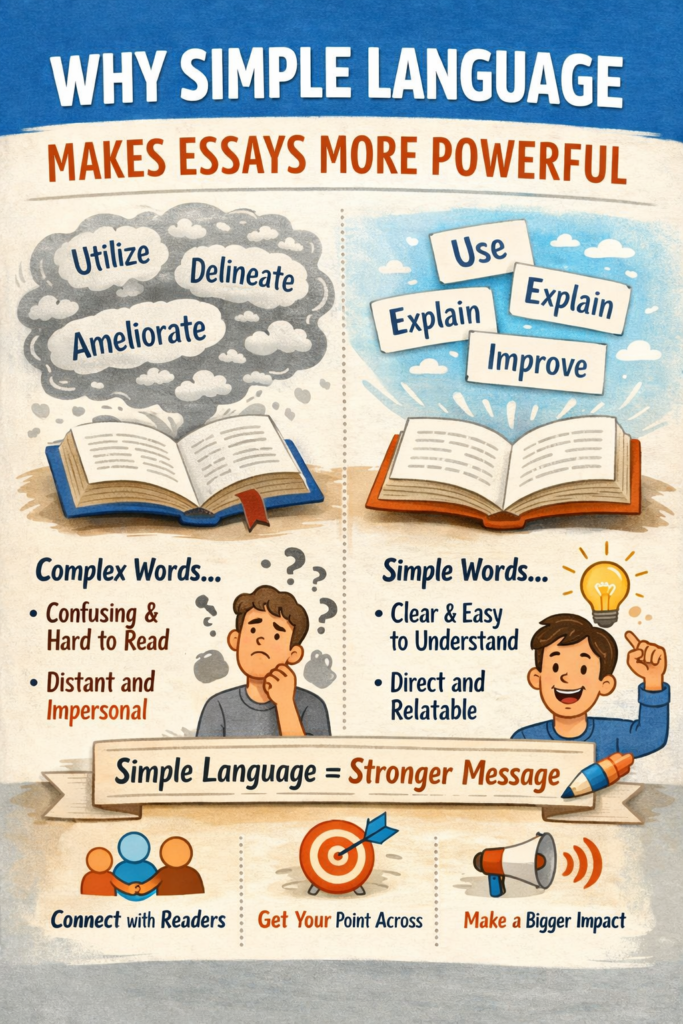
In academic writing, many students believe that using complex vocabulary and long, intricate sentences will make their essays appear more intelligent. However, the true power of an essay lies not in how complicated it sounds, but in how clearly it communicates ideas. Simple language, when used effectively, can make essays more engaging, persuasive, and impactful.
Clarity: Getting Your Message Across
One of the primary advantages of simple language is clarity. Essays are meant to convey ideas, arguments, and evidence in a way that the reader can easily understand. When writers use overly complex words or convoluted sentence structures, the message often becomes unclear. Readers may struggle to follow the argument, which reduces the effectiveness of the essay. In contrast, simple language ensures that the reader grasps the main points quickly and without confusion.
Better Readability Keeps Readers Engaged
Another important benefit is improved readability. Essays written in plain and straightforward language are easier to read and more enjoyable. Readers are more likely to stay engaged when they do not have to pause frequently to interpret difficult words or sentences. This is especially important in academic settings, where instructors often read many essays. A clear and readable essay stands out because it respects the reader’s time and effort.
Simple Language Strengthens Your Arguments
Simple language also strengthens arguments. When ideas are expressed clearly, they become more convincing. Strong arguments do not rely on complicated wording; instead, they depend on logical reasoning and solid evidence. By using simple language, writers can present their points directly and confidently, making their arguments more persuasive. In many cases, clarity can be more powerful than complexity.
Fewer Errors, More Accurate Communication
Moreover, using simple language reduces the risk of errors. When students try to use advanced vocabulary that they are not fully comfortable with, they may misuse words or create awkward sentences. This can weaken the overall quality of the essay. Simple language allows writers to stay within their comfort zone while still expressing ideas effectively. It leads to fewer grammatical mistakes and more accurate communication.
Reaching a Wider Audience
Another key advantage is accessibility. Essays written in simple language can be understood by a wider audience. Not all readers have the same level of knowledge or familiarity with complex terminology. By keeping the language simple, writers ensure that their work can reach and resonate with more people. This is particularly valuable when writing essays intended for diverse audiences.
Simple Does Not Mean Simplistic
It is important to note that simple language does not mean simplistic thinking. Writers can still present deep, analytical, and sophisticated ideas using clear and concise words. In fact, expressing complex ideas in a simple way often requires a deeper understanding of the topic. It shows that the writer truly understands the subject and can explain it effectively.
Conclusion: Communicate, Don’t Complicate
Simple language enhances the power of an essay by improving clarity, readability, and persuasiveness. It helps writers communicate their ideas more effectively while making their work accessible to a broader audience. Instead of focusing on sounding complicated, students should aim to be clear and precise. After all, the goal of writing is not to impress with difficult words, but to communicate ideas in the most effective way possible.