

Introduction
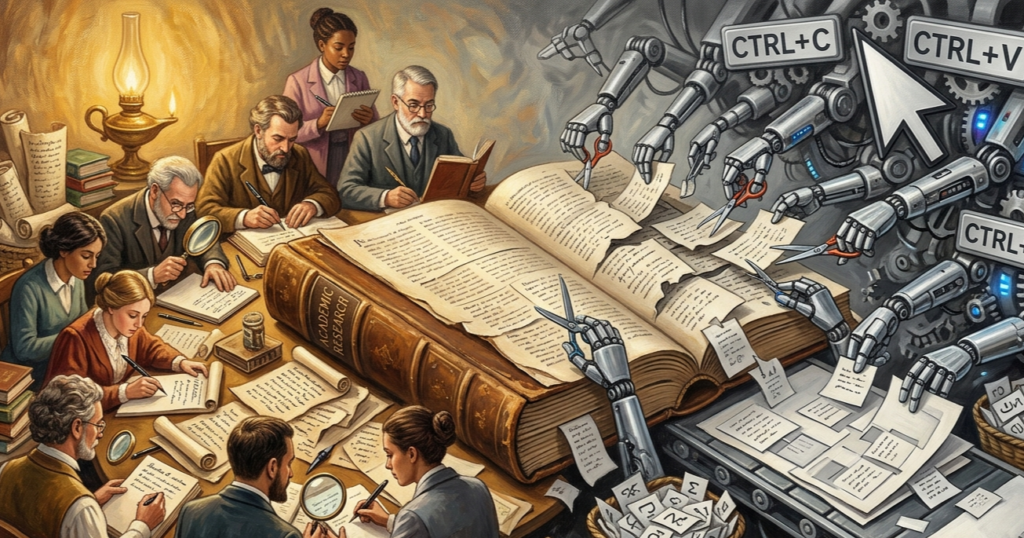
In today’s digital age, information is available at our fingertips. While this accessibility has made research easier, it has also given rise to a dangerous trend, copy-paste culture. Instead of critically analyzing and synthesizing information, many students and researchers simply copy content from online sources and present it as their own. This habit is gradually eroding the quality, originality, and integrity of academic research.
Lack of Critical Thinking
One of the most serious consequences of copy-paste culture is the decline in critical thinking skills. Academic research is meant to challenge the mind, encourage questioning, and develop analytical abilities. However, when individuals rely on copying existing material, they bypass the thinking process entirely. Over time, this weakens their ability to interpret data, evaluate arguments, and form independent conclusions—skills that are essential in both academic and professional life.
Decline in Originality
Originality is the backbone of meaningful research. New ideas, perspectives, and discoveries are what drive knowledge forward. Copy-paste practices discourage creativity, as individuals tend to depend on existing work instead of generating their own insights. As a result, academic work becomes repetitive and lacks innovation. When everyone copies, no one creates, and progress stagnates.
Ethical Concerns and Plagiarism
Copy-paste culture is closely linked to plagiarism, which is a serious academic offense. Presenting someone else’s work without proper acknowledgment violates ethical standards and can lead to severe consequences, including academic penalties and damage to reputation. Beyond institutional rules, plagiarism undermines the core value of honesty in education. It sends a message that shortcuts are acceptable, which can carry into professional environments as well.
Superficial Learning
When students copy content instead of engaging with it, learning becomes superficial. They may complete assignments quickly, but they fail to truly understand the subject matter. This results in poor knowledge retention and an inability to apply concepts in real-world situations. Education is not just about submitting assignments; it is about gaining knowledge and developing skills. Copy-paste habits defeat this purpose.
Impact on Academic Standards
Widespread copying lowers the overall standard of academic research. When institutions receive work that lacks originality and depth, it becomes difficult to assess true capability. This can lead to a decline in academic credibility and trust. Over time, degrees and certifications may lose their value if they are associated with poor-quality research.
Easy Access vs. Responsible Use
The internet itself is not the problem, it is a powerful tool for learning. The issue lies in how it is used. Students and researchers must learn to use online resources responsibly. This means understanding concepts, paraphing ideas in their own words, and properly citing sources. Technology should support learning, not replace thinking.
How to Overcome Copy-Paste Culture
To combat this issue, both students and educators need to take active steps. Students should focus on developing research and writing skills, while educators should design assignments that encourage analysis and originality. Tools like plagiarism checkers can help, but the real change must come from a shift in mindset, valuing learning over shortcuts.
Conclusion
Copy-paste culture may offer a quick and easy way to complete academic tasks, but its long-term consequences are harmful. It weakens critical thinking, reduces originality, and compromises ethical standards. To preserve the integrity of academic research, it is essential to move away from copying and toward genuine learning and creativity. True education lies not in repeating what others have said, but in thinking, understanding, and contributing something new.