

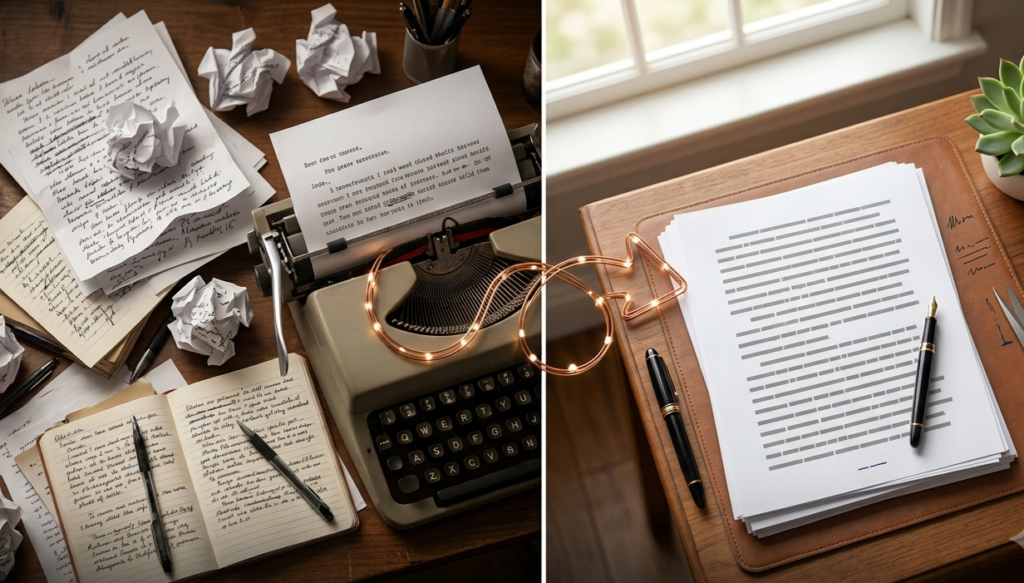
Every writer knows the feeling. You finish a first draft, read it back, and wonder how something you worked so hard on could sound so clumsy. Then you revise it once, and suddenly it reads like a different piece entirely. This isn’t a coincidence. There’s a reason second drafts almost always outshine first drafts, and understanding why can change how you approach writing altogether.
The First Draft Has a Different Job
A first draft isn’t meant to be good. Its real purpose is to get your ideas out of your head and onto the page. While you’re writing it, your brain is juggling too many things at once: structure, word choice, logic, tone, and the fear of the blank page. Something has to give, and usually it’s polish. The first draft exists so you have raw material to work with, not a finished product.
Distance Creates Clarity
Once a draft is done, even a short break gives you distance from it. That distance is powerful. When you first write something, you’re too close to see its weaknesses. You know what you meant to say, so your brain quietly fills in gaps that a reader wouldn’t fill in themselves. Coming back later, even an hour later, lets you read more like an actual reader and less like the person who just typed it.
You’re Editing, Not Creating
Writing a first draft and editing a second draft use different mental skills. Creating something from nothing demands a kind of loose, generative thinking. Editing demands focus and judgment. When you switch from one mode to the other, you naturally catch things you missed before: repeated words, unclear sentences, ideas that don’t connect, or a structure that needs reordering. Your brain simply works better when it only has one job at a time.
How to Use This to Your Advantage
Once you accept that your first draft is supposed to be rough, writing becomes far less stressful. Here’s how to make the most of this natural process.
Write fast, edit slow. Don’t try to perfect sentences as you go. Get the whole draft down, even if parts feel messy, and save the careful thinking for the revision stage.
Take a real break before revising. Even a short walk or a night of sleep can be enough to reset your perspective. The goal is to come back as a reader, not the writer who just finished.
Read it out loud. Awkward phrasing and unclear logic often become obvious the moment you hear them instead of just seeing them.
Cut before you add. Most first drafts have more words than they need. Look for repeated ideas, filler phrases, and sentences that don’t earn their place.
Expect to revise more than once. The second draft is rarely the final one either. Each pass should have a specific focus, whether that’s structure, clarity, or tone, rather than trying to fix everything at once.
The Takeaway
If your first draft feels disappointing, that’s not a sign you’re a bad writer. It’s a sign the process is working the way it’s supposed to. The real writing happens in revision, when you finally have something to shape instead of a blank page to fill. Give yourself permission to write badly at first, because that’s what makes the second draft so much stronger.