

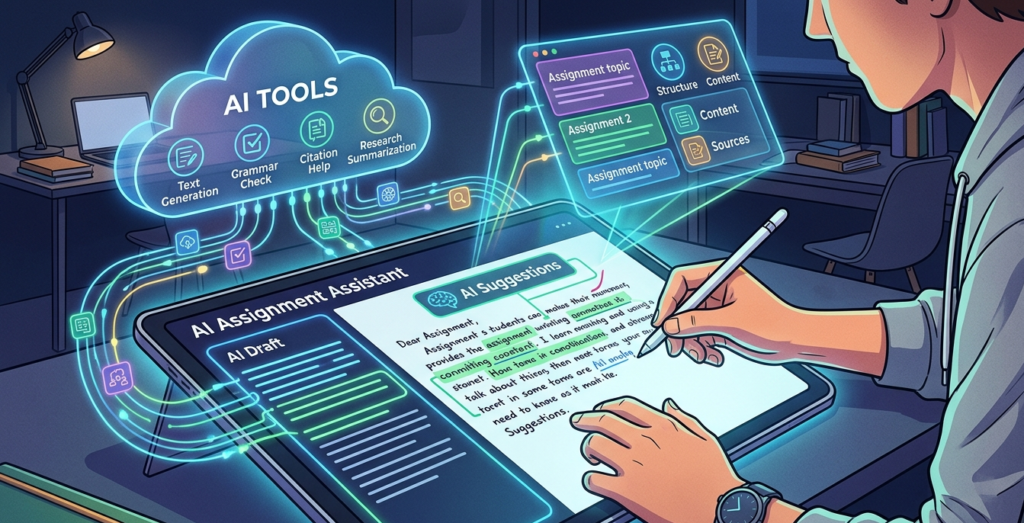
In recent years, artificial intelligence (AI) has transformed the way students approach assignment writing. From brainstorming ideas to editing final drafts, AI tools are becoming an essential part of academic life. While these technologies offer convenience and efficiency, they also raise important questions about originality, learning, and academic integrity.
One of the biggest advantages of AI tools is their ability to generate ideas quickly. Many students struggle with starting an assignment, especially when they face writer’s block. AI-powered platforms can suggest topics, outlines, and even thesis statements within seconds. This not only saves time but also helps students gain clarity about their subject. Instead of spending hours thinking about where to begin, students can focus more on developing their arguments and understanding the topic.
Another major impact of AI is in research support. AI tools can summarize long articles, highlight key points, and even suggest relevant sources. This makes the research process faster and more organized. Students no longer need to read every single page of a lengthy document; instead, they can use AI summaries to grasp the main ideas and decide which sources are most useful. However, relying too much on summaries can sometimes limit deep understanding, so it’s important to balance AI assistance with personal reading.
AI has also revolutionized the writing process itself. Many tools can generate complete paragraphs or even full essays based on a prompt. This can be helpful for students who are unsure about structure or language. AI-generated content often provides a strong starting point, which students can then refine and personalize. However, this convenience can lead to overdependence. If students submit AI-generated work without modification, they risk losing their own voice and critical thinking skills.
Editing and proofreading have become much easier with AI. Grammar checkers and writing assistants can instantly detect spelling mistakes, awkward sentences, and unclear phrasing. They also offer suggestions to improve tone and readability. This helps students produce polished and professional assignments, even if their language skills are still developing. As a result, students can learn from these corrections and gradually improve their writing abilities over time.
Despite these benefits, the use of AI in assignment writing comes with challenges. One major concern is academic integrity. Educational institutions expect students to produce original work, and excessive reliance on AI may lead to plagiarism or unethical practices. Some AI tools generate content that may not be entirely accurate or properly referenced, which can affect the quality of assignments. Therefore, students must use these tools responsibly and ensure that their work reflects their own understanding.
Another concern is the potential decline in critical thinking skills. Writing assignments are designed to help students analyze, evaluate, and express ideas independently. If AI does most of the work, students may miss out on these learning opportunities. It is important to remember that AI should be used as a support tool, not a replacement for genuine effort and creativity.
In conclusion, AI tools are significantly changing assignment writing by making it faster, easier, and more accessible. They provide valuable assistance in brainstorming, researching, writing, and editing. However, students must use these tools wisely to maintain academic integrity and continue developing their own skills. When used responsibly, AI can enhance learning rather than replace it, helping students achieve better results while still growing intellectually.