

Studying abroad is one of the most rewarding experiences a student can pursue. Yet behind the excitement of a new country and a fresh academic chapter lies a set of very real challenges. International students face a unique combination of language barriers, cultural differences, and unfamiliar academic systems. Despite all this, thousands of them succeed every year. Here is a look at how they do it.
Bridging the Language Gap
For many international students, English is a second or even third language. Academic writing, in particular, demands precision that everyday conversation does not. Students tackle this by dedicating extra time to reading academic papers, building subject-specific vocabulary, and using university writing centers. Many campuses offer free language support sessions where students can have their essays reviewed before submission. Over time, consistent exposure to academic material sharpens both comprehension and writing ability considerably.
Adapting to a New Academic Culture
Different countries have very different expectations in the classroom. A student from a culture that prizes rote learning may find it difficult to adjust to essay-based assessments or group debates. Conversely, someone used to open discussion may struggle with highly structured examination formats.
International students learn to adapt by speaking directly with professors during office hours, asking classmates how they approach assignments, and reviewing past exam papers. This kind of proactive inquiry helps them decode what is expected and align their efforts accordingly.
Building a Support Network
Isolation is one of the biggest obstacles international students face, and it directly affects academic performance. Students who build a strong social and academic network tend to cope far better with coursework pressure.
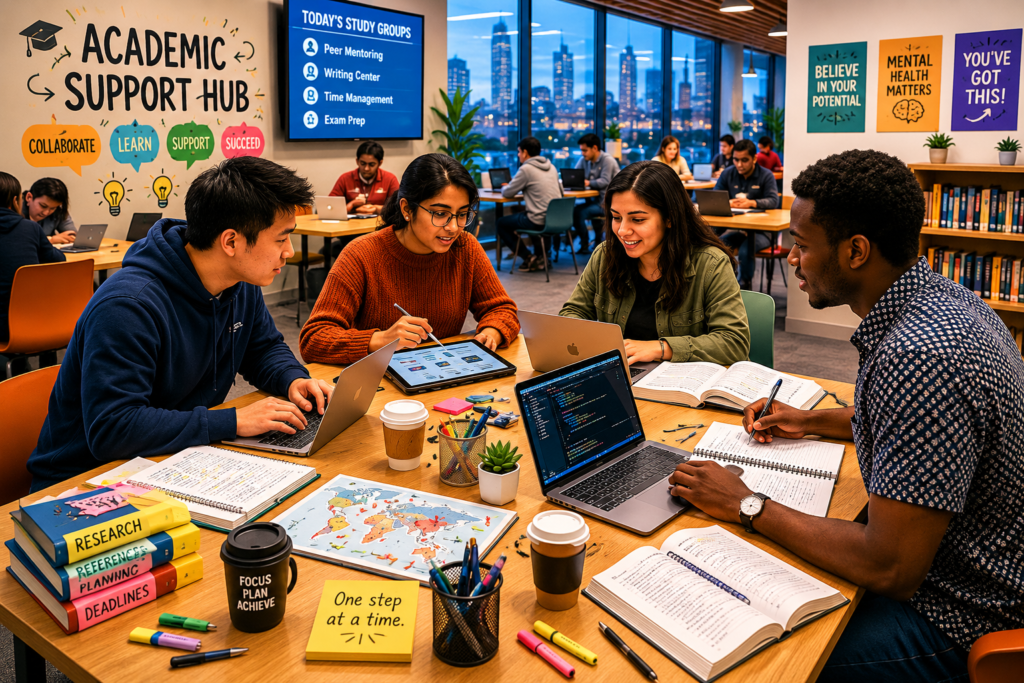
Study groups are particularly valuable. When international students join mixed groups, they gain access to different perspectives, shared notes, and peer explanations that textbooks simply cannot replicate. Many universities also pair new international arrivals with senior student mentors who guide them through the first demanding semester.
Managing Time Across Multiple Demands
International students often juggle coursework alongside part-time work, visa requirements, and the emotional weight of being far from family. Effective time management becomes not just a study skill but a survival skill.
Students use digital tools like calendar apps and task managers to break assignments into smaller, manageable steps. Starting work well before deadlines reduces last-minute stress and leaves room for revision. Libraries and quiet study spaces on campus become important anchors in a busy weekly routine.
Making Use of Institutional Resources
Universities invest heavily in support services, yet many students never use them. International students who thrive academically tend to be the ones who actively seek out these resources.
From academic skills workshops and counseling services to subject-specific tutoring and disability support, these services exist precisely for moments when coursework feels overwhelming. International student offices, in particular, often serve as a one-stop hub for both academic and personal guidance.
Staying Motivated Through the Difficulties
Perhaps the most powerful tool international students carry is motivation. Most have made significant financial and personal sacrifices to study abroad. That sense of purpose fuels persistence when deadlines pile up or grades disappoint.
Keeping sight of long-term goals, celebrating small wins, and staying connected with family back home all contribute to emotional resilience. Many international students look back on their toughest academic moments as the ones that shaped them most.
Coursework challenges are real, but they are far from insurmountable. With the right strategies and support, international students not only survive their studies but often emerge as some of the most adaptable and determined graduates in the room.