

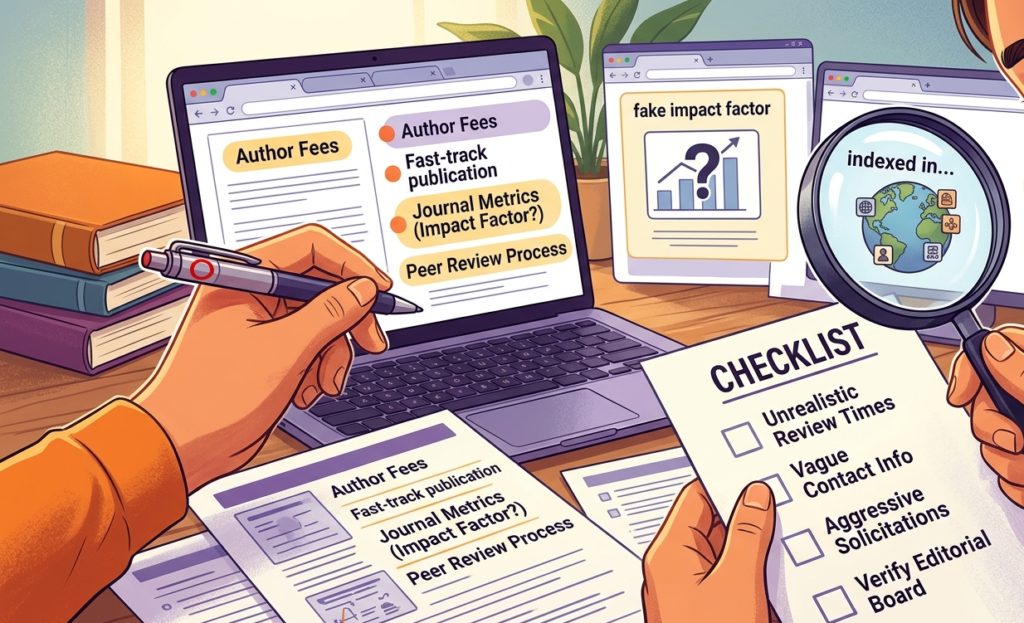
Academic publishing has a shadow industry, and it thrives on the pressure researchers feel to publish quickly. Predatory journals promise fast peer review, guaranteed acceptance, and a shiny new line on your CV. What they actually deliver is a paper trapped behind a fake journal name, little to no editorial oversight, and a bill you did not expect. Knowing how to spot these outlets before you submit can save your reputation and your research.
Check the Editorial Board Carefully
A legitimate journal lists real editors with verifiable affiliations. Search for a few board members by name. Do they actually work at the institutions listed? Have they published in the field the journal claims to cover? Predatory journals often list scholars without permission, use fabricated names, or recruit anyone willing to lend a title regardless of expertise. If you cannot confirm a single editor’s credentials, treat that as a serious warning sign.
Scrutinize the Peer Review Timeline
Genuine peer review takes time. Reviewers need weeks, sometimes months, to read a manuscript carefully, request revisions, and reach a decision. If a journal promises acceptance within 48 hours or a week, no meaningful review is happening. Speed is not a feature here. It is a symptom of a journal that exists to collect fees rather than evaluate scholarship.
Look at the Fee Structure
Legitimate open access journals often charge article processing fees, so a fee alone is not proof of a scam. The problem is transparency. Predatory journals frequently hide fees until after acceptance, then demand payment before publication with little room for negotiation or withdrawal. Check the journal’s website early for a clear, upfront fee schedule. If pricing is vague or only revealed once you are committed, walk away.
Investigate the Journal’s Indexing Claims
Many predatory journals claim indexing in prestigious databases they have no real connection to. Verify these claims directly on the database’s own website rather than trusting a badge or logo on the journal’s page. Journals genuinely indexed in Scopus, Web of Science, or PubMed will appear in a direct search of those platforms. If you cannot find the journal listed there despite bold claims, the claim is false.
Evaluate the Journal’s Scope and Past Issues
Read a handful of previously published articles. Are they relevant to the journal’s stated scope, or does the journal publish anything from astrophysics to nursing in the same issue? A journal with no clear focus is often chasing submission fees rather than building a coherent body of scholarship. Also check for consistent formatting, working links, and functioning citations across issues. Sloppy production values across multiple issues suggest minimal quality control.
Use Established Checklists and Databases
Tools like Think, Check, Submit offer a structured checklist covering ownership transparency, contact information, and editorial standards. Cabell’s Predatory Reports and similar databases maintain updated lists of journals flagged for predatory practices. Cross referencing a journal against these resources takes minutes and can prevent months of wasted effort.
Trust Your Instincts
If something about a journal’s website, communication style, or promises feels off, it probably is. Unsolicited invitation emails praising your “excellent expertise” in a field you barely work in, aggressive deadlines, and poor grammar throughout official correspondence are common red flags. Publishing is competitive, but a rushed decision to submit somewhere questionable can cost far more than the time saved.
Careful vetting before submission protects your work, your credibility, and the integrity of the research community as a whole.