

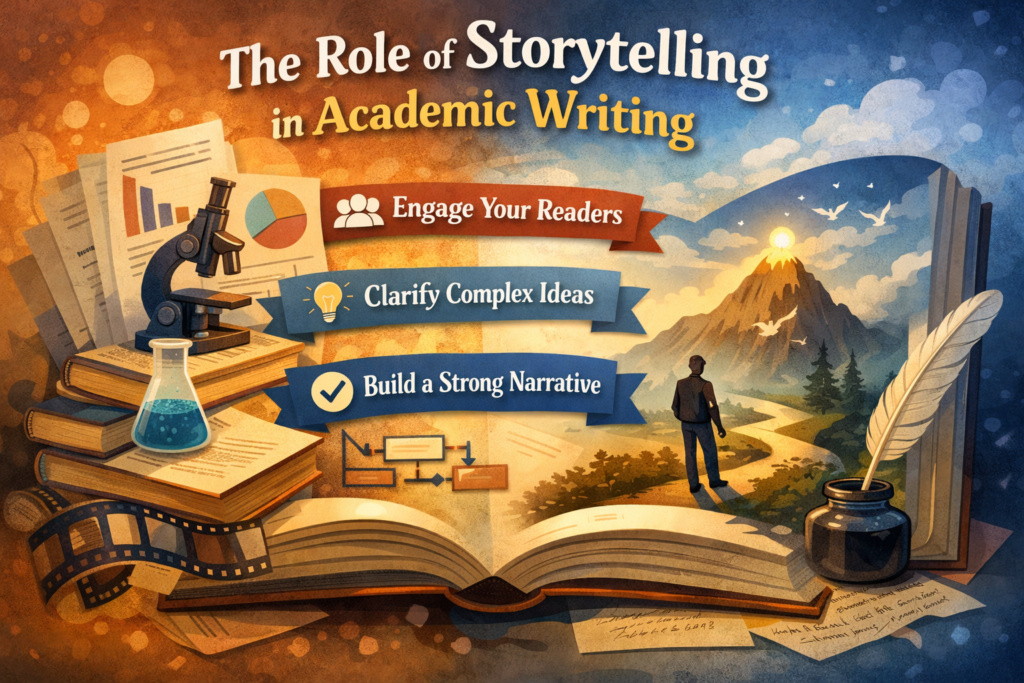
Academic writing is often perceived as formal, structured, and heavily focused on facts and evidence. While these elements are essential, the role of storytelling in academic article writing is increasingly gaining recognition. Storytelling does not mean making content fictional or informal; instead, it involves presenting ideas in a clear, engaging, and meaningful way that captures the reader’s attention while maintaining academic integrity.
At its core, storytelling in academic writing is about creating a logical and compelling narrative. Every research article tells a story—starting with a problem, exploring existing knowledge, presenting new findings, and concluding with insights or recommendations. When writers approach their work as a narrative, it becomes easier to guide readers through complex ideas and maintain their interest from beginning to end.
One of the key benefits of storytelling in academic writing is improved clarity. Many academic topics can be dense and difficult to understand, especially for readers who are not experts in the field. By structuring content like a story, writers can break down complicated concepts into more digestible sections. For example, introducing a real-world problem at the beginning helps readers understand why the research matters. This creates context and gives purpose to the study, making it more relatable and easier to follow.
Engagement is another important advantage. Traditional academic writing can sometimes feel dry or overly technical, which may discourage readers. Storytelling techniques—such as using examples, case studies, or scenarios—help bring the content to life. When readers feel connected to the topic, they are more likely to stay engaged and understand the message being conveyed. This is especially important in interdisciplinary research, where audiences may come from diverse academic backgrounds.
Storytelling also strengthens the overall structure of an academic article. A well-written paper typically follows a clear progression: introduction, literature review, methodology, results, and conclusion. By viewing this structure as a narrative, writers can ensure smooth transitions between sections. For instance, the introduction sets the stage, the literature review builds the background, the methodology explains how the “story” unfolds, and the results reveal the key findings. The conclusion then ties everything together, highlighting the significance of the research.
Another important role of storytelling is in persuasion. Academic writing often aims to convince readers of a particular argument or viewpoint. Simply presenting data is not always enough; writers must explain why their findings matter. Storytelling helps in framing arguments more effectively by connecting evidence with meaningful interpretation. It allows writers to highlight the relevance of their research and demonstrate its impact on real-world issues.
However, it is important to maintain a balance. Academic storytelling should not compromise objectivity or credibility. Writers must avoid exaggeration, personal bias, or unnecessary dramatization. The focus should remain on evidence-based arguments, supported by reliable sources. Storytelling techniques should enhance clarity and engagement, not replace rigorous analysis.
In addition, the use of language plays a crucial role in storytelling. Clear and concise writing, along with logical flow, helps readers move smoothly through the article. Avoiding overly complex jargon where possible and explaining key terms can make the content more accessible without reducing its academic value.
In conclusion, storytelling is a powerful tool in academic article writing. It helps improve clarity, enhance engagement, strengthen structure, and support persuasive arguments. By presenting research as a coherent and meaningful narrative, writers can communicate their ideas more effectively and make their work more impactful. When used appropriately, storytelling transforms academic writing from a purely informational task into a compelling and insightful experience for readers.