

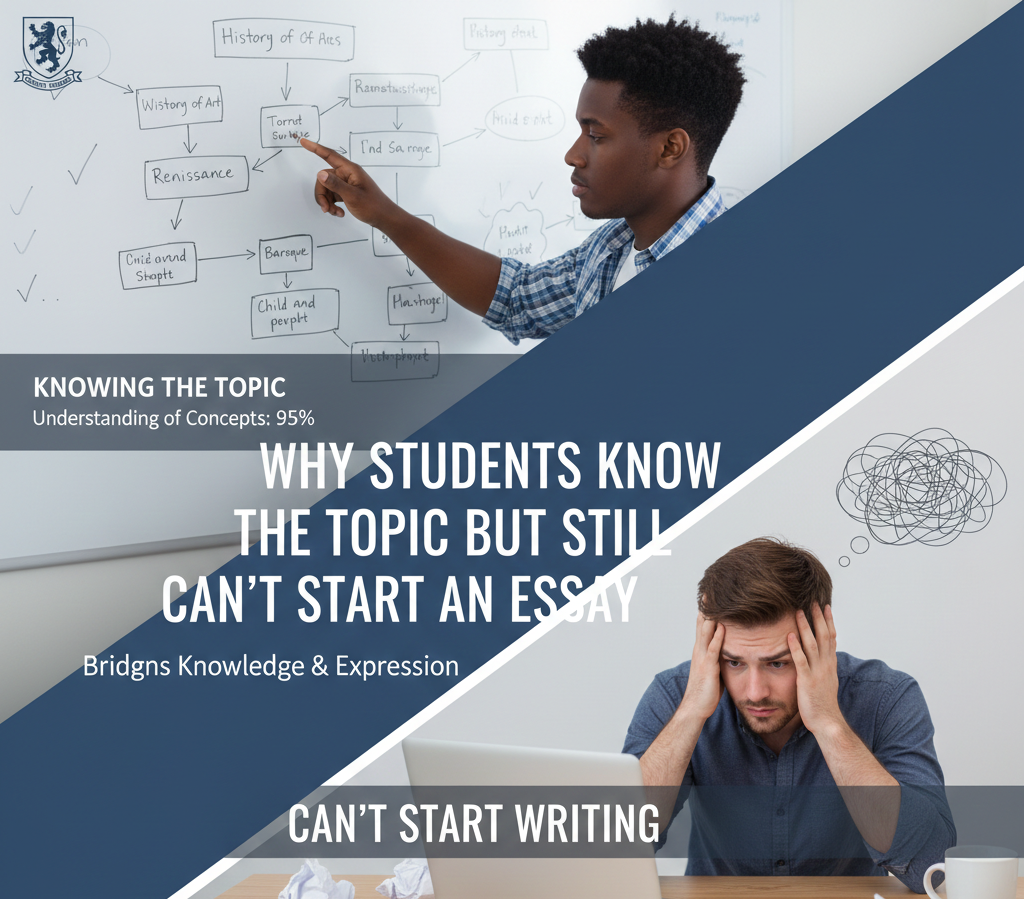
Many UK university students face a frustrating problem: they understand the topic inside out but struggle to write the first sentence of an essay. This common issue is not about knowledge — it’s about structure, confidence, and planning, key factors that UK lecturers look for in academic writing.
Understanding why this happens and learning strategies to overcome it can save time, reduce stress, and improve essay marks significantly.
Understanding the “Blank Page” Problem
Even when students have done thorough research or know the topic, starting an essay can feel overwhelming. This phenomenon, often called writer’s block, arises because knowing information is different from organising it into a coherent academic argument.
UK universities emphasise not just knowledge, but critical thinking, clarity, and logical flow. So, if your essay starts with scattered thoughts or vague ideas, it can be difficult to get past the first paragraph.
Why Knowledge Alone Isn’t Enough
Knowing the topic is just the foundation. Lecturers and essay markers expect students to demonstrate:
-
Critical analysis of ideas
-
Clear structure with introduction, body, and conclusion
-
Relevant examples from credible sources
-
Academic writing style
Without planning and structure, students may overthink the introduction, struggle to form a thesis, or feel unsure about what to write first. This is common across UK higher education, from undergraduate essays to postgraduate dissertations.
Common Barriers to Starting an Essay
Several factors make starting an essay difficult for UK students:
-
Perfectionism – wanting the first sentence to be flawless can stop progress.
-
Overwhelm – too many ideas without clear organisation can paralyse writing.
-
Lack of clear thesis – without a central argument, introductions become confusing.
-
Fear of plagiarism – students worry about citing sources correctly before they even begin.
Recognising these barriers is the first step toward writing confidently.
Strategies to Start Writing Confidently
UK students can overcome these challenges with practical techniques:
-
Draft a thesis statement first
Define your main argument in one clear sentence. This guides the essay and gives direction to your introduction. -
Use a simple structure
Start with a brief overview, outline your main points, and signal your argument. Even a rough introduction is better than staring at a blank page. -
Write in chunks
Begin with body paragraphs if the introduction feels daunting. Once the argument is clear, the introduction often writes itself. -
Freewriting
Spend 5–10 minutes writing everything you know about the topic without worrying about grammar or style. This breaks mental barriers and generates content to refine later. -
Engage with UK sources
Using credible references from UK academic journals or university libraries not only strengthens your argument but also boosts confidence in your writing.
Final Thoughts
Knowing your topic is just the first step in essay writing. Success in UK universities comes from combining knowledge with planning, structure, and clear academic style. Overcoming the initial “blank page” anxiety often leads to faster writing and higher-quality essays.
If you find yourself stuck, start writing anyway — whether it’s a rough introduction, bullet points, or body paragraphs. Writing is a process, and even small progress can build momentum.
Remember: essays are not about perfect first sentences; they’re about conveying your argument logically and confidently.