

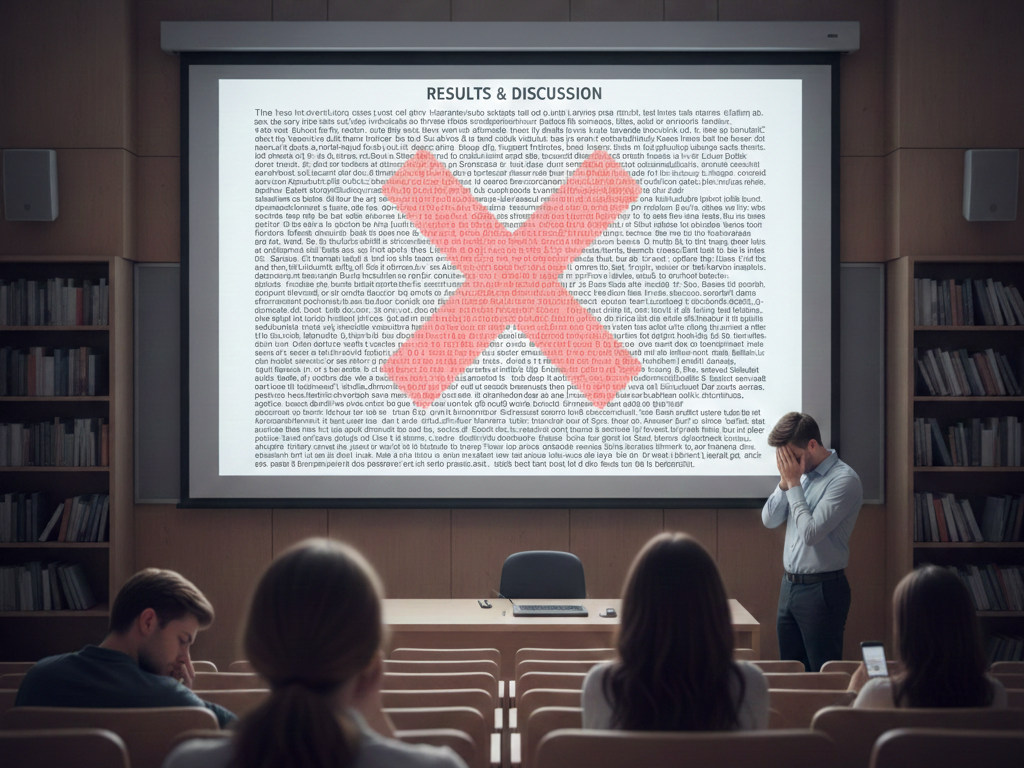
Academic presentations are meant to clarify ideas, not overwhelm audiences. Yet many students and researchers fall into the trap of filling PowerPoint presentation slides with dense paragraphs of text, believing more words equal more credibility. In reality, excessive text weakens understanding, reduces engagement, and can even damage academic performance. This article explores why too much text ruins academic presentations and how smarter PowerPoint slide design can make your message more effective.
The Cognitive Cost of Text-Heavy Slides
Human attention is limited. When slides are overloaded with text, audiences struggle to read and listen at the same time. This creates cognitive dissonance, where viewers feel mentally conflicted between processing spoken explanations and reading dense content. As a result, key points are missed.
Text-heavy slides also trigger cognitive biased thinking. Audiences may judge a presentation as boring or confusing before fully engaging with the research itself. Even strong arguments lose impact when hidden inside cluttered PowerPoint slides.
Why Academics Overuse Text
Many presenters believe academic work must look serious and detailed, leading them to copy content directly from papers into slides. Others rely too much on image to text tools or automated software, pasting large chunks without refining them.
While tools like an AI PowerPoint generator or generator fancy text can save time, they often prioritise quantity over clarity. Without careful editing, these tools produce slides packed with unnecessary text that distracts rather than supports learning.
The Role of Visual Hierarchy
Effective PowerPoint slide design uses visuals to guide attention. Clean layouts, limited bullet points, and strong headings help audiences understand structure quickly. Choosing appropriate PowerPoint themes and a subtle PowerPoint background ensures readability without overpowering content.
Well-designed PowerPoint presentation templates encourage balance by limiting text space and promoting visuals. Looking at strong PowerPoint presentation examples can help academics see how concise wording improves clarity.
How Too Much Text Affects Academic Assessment
In academic settings, presentations are often graded on clarity, engagement, and communication skills. Overloaded slides suggest poor organisation and weak presentation strategy. Examiners expect presenters to explain ideas verbally, not read directly from PowerPoint presentation slides.
Understanding how to make a PowerPoint presentation properly means treating slides as visual aids, not scripts. Excessive text reduces eye contact, confidence, and audience connection—key factors in assessment success.
Smarter Alternatives to Text Overload
Instead of long paragraphs, use keywords, diagrams, charts, and visuals. Short phrases supported by verbal explanation are far more effective. Thoughtful PowerPoint slide ideas such as infographics or process diagrams communicate complex information quickly.
Modern tools, including an AI PowerPoint generator, can be helpful when used carefully. They should assist with layout and structure, not replace critical thinking. Always review generated content to remove unnecessary text and refine messaging.
Conclusion
Too much text ruins academic presentations by overwhelming audiences, causing cognitive dissonance, and reinforcing cognitive biased judgments. Strong presentations rely on clear visuals, concise wording, and confident delivery. By improving PowerPoint slide design, selecting suitable PowerPoint themes, and learning how to make a PowerPoint presentation effectively, academics can transform their slides from crowded documents into powerful communication tools.
In academia, less text does not mean less knowledge—it means better understanding.